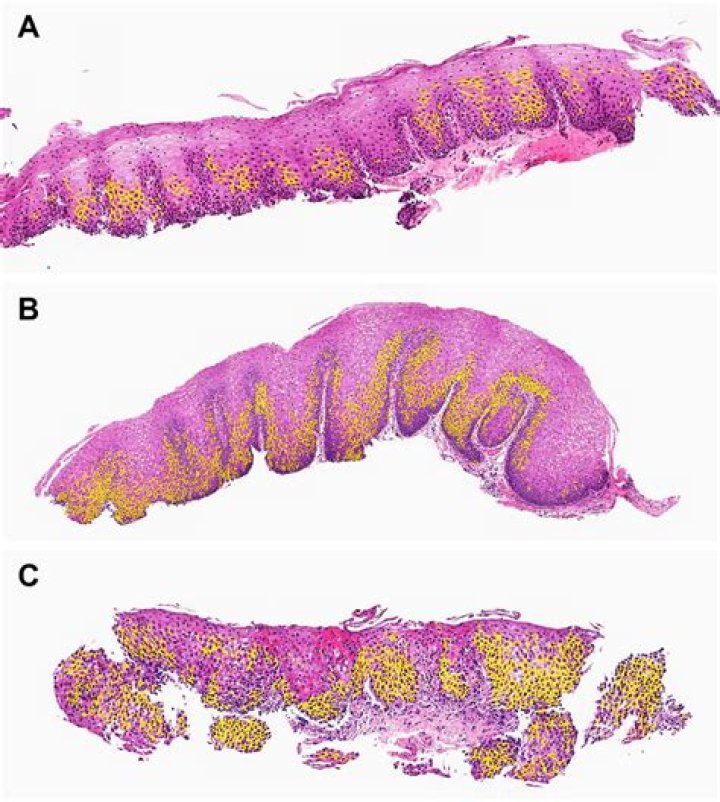
How is parathyroid adenoma different from hyperplasia

Isabella Floyd
Updated on May 01, 2026
In hyperplasia all four parathyroid glands are affected although they are not necessarily enlarged. In adenoma usually only one gland is affected while the other parathyroid glands may become atrophic. Parathyroid carcinoma is rare.
What is the difference between adenoma and hyperplasia?
An adenoma consists of one enlarged gland, which sometimes has a compressed rim of normal parathyroid tissue. It is also necessary to have at least one biopsy-proven additional normal gland. Hyperplasia involves multiple glands.
What causes hyperplasia of the parathyroid gland?
The most common conditions that can cause parathyroid hyperplasia are chronic kidney disease and chronic vitamin D deficiency. In both cases, the parathyroid glands become enlarged because vitamin D and calcium levels are too low.
What is a parathyroid hyperplasia?
Parathyroid hyperplasia is the enlargement of all four parathyroid glands. The parathyroid glands are four glands in the neck that produce parathyroid hormone (PTH).How do you rule out a parathyroid adenoma?
Parathyroid adenomas are usually discovered when a higher-than-normal calcium level shows up in a routine blood test, particularly in people without symptoms. Doctors then confirm the diagnosis of primary hyperparathyroidism with a test that shows parathyroid hormone levels in the blood are higher than normal.
Is parathyroid adenoma serious?
Parathyroid adenoma is a small benign tumor on one or more of your four parathyroid glands. These tumors can lead to a condition called hyperparathyroidism. This condition can cause bone fractures or kidney stones. In mild cases, your doctor may simply monitor your condition.
What is considered a large parathyroid adenoma?
Giant parathyroid adenoma is a rare type of parathyroid adenoma defined as weighing > 3.5 g. They present as primary hyperparathyroidism but with more elevated laboratory findings and more severe clinical presentations due to the larger tissue mass.
Can a parathyroid adenoma be cancerous?
Most parathyroid tumors are not cancer (benign). Parathyroid cancers are very rare. You have 4 parathyroid glands. They are small, pea-sized glands in your neck or upper chest near the thyroid gland.How common are multiple parathyroid adenomas?
Background: Parathyroid adenoma is the most common cause of primary hyperparathyroidism (pHPT). Adenomas usually involve only a single gland, and the remaining glands are normal or suppressed. Multiple parathyroid adenomas have been reported to occur in as high as 11% of patients with pHPT.
Are parathyroid adenomas common?Parathyroid adenomas are common. Most parathyroid adenomas do not have an identified cause.
Article first time published onCan you feel a parathyroid adenoma?
Dysphagia, neck discomfort and sore throat are among common symptoms of parathyroid adenoma. Reports reveal that pain, swelling, tenderness in anterior neck, dysphagia, hoarseness, and ecchymosis are among the usual presentations of parathyroid adenoma.
How is parathyroid adenoma different from carcinoma?
Grossly, parathyroid carcinomas can be indistinguishable from adenomas. They are usually present as larger masses that are adherent to adjacent structures, but these adherences are not diagnosed as periglandular fibrosis occasionally occurs in adenomas following haemorrhage 28, 29.
Are parathyroid adenomas always benign?
Parathyroid tumors may increase the levels of parathyroid hormones. This leads to more calcium in your blood. This is called hypercalcemia. Most parathyroid tumors are benign (noncancerous) adenomas.
What does a parathyroid adenoma look like on ultrasound?
Normal-sized parathyroid glands are usually not visualized with ultrasound. On gray-scale images, parathyroid adenomas appear as a discrete, oval, anechoic or hypoechoic masses located posterior to the thyroid gland, anterior to the longus colli muscles, and, frequently, medial to the common carotid artery.
Can a parathyroid adenoma go away?
Parathyroid adenomas will NEVER go away on their own. They will NEVER decrease in size on their own. They are TUMORS that must be removed. They are NOT cancer, they are benign tumors that make uncontrolled amounts of hormone.
Do parathyroid adenomas grow?
Parathyroid adenomas start very small but in time grow to be large (almost one inch long). They only cause problems because they produce hormone not because they get large enough to push on the surrounding tissue; they don’t directly cause neck pain or breathing issues.
How long does it take to remove a parathyroid adenoma?
Your surgeon will make a small cut (1 to 2 inches; or 2.5 to 5 cm) on one side of your neck, and then remove the diseased gland through it. This procedure takes about 1 hour.
Can a parathyroid adenoma cause coughing?
Infrequently, parathyroid adenomas can present with rare signs and symptoms due to pressure effect on surrounding structures, e.g. esophagus causing dysphagia or trachea causing dyspnea or chronic cough due to pressure on recurrent laryngeal nerve.
How do you know if you have a parathyroid tumor?
The most common test is a serum calcium test. Elevated serum calcium levels can suggest the presence of a parathyroid tumor or hyperplasia, which are overactive cells, on 1 or more glands. Another common laboratory test looks for elevated levels of the parathyroid hormone (PTH) and phosphorus levels in the blood.
What does parathyroid adenoma mean?
A parathyroid adenoma is a noncancerous (benign) tumor of the parathyroid glands. The parathyroid glands are located in the neck, near or attached to the back side of the thyroid gland.
How do you know which parathyroid is bad?
The Sestamibi Scan is now the preferred method for identifying a diseased parathyroid gland prior to an operation. Almost 80 percent correct when it shows a single gland when done by experts that do LOTS of these scans. But 40-50% will be negative regardless of who does it.
What is the best imaging for parathyroid adenoma?
Parathyroid multimodality imaging Sonography and 99mTc-sestamibi scintigraphy are the dominant imaging techniques for the preoperative location of parathyroid adenomas.
What kind of doctor treats parathyroid disease?
Within the endocrine surgery community, a surgeon who performs 50 or more parathyroid operations per year is considered an expert parathyroid surgeon. These surgeons can be found through the American Association of Endocrine Surgeons (AAES).
Do parathyroid adenomas calcify?
Calcification is reportedly more common in parathyroid carcinomas than in adenomas [12] and one of the four lesions with calcification was a parathyroid carcinoma in our series.